
Australia remains one of the world’s premier destinations for higher education, hosting over 700,000 international students. However, the transition from a domestic curriculum to the Australian Qualifications Framework (AQF) is often more than a geographic shift—it is a complete pedagogical pivot. The Australian system places a high premium on critical thinking, academic integrity, and self-directed research.
For many entering this system, the first few months are a whirlwind of adjusting to local grading rubrics and the Tertiary Education Quality and Standards Agency (TEQSA) regulations. Success here isn’t just about working hard; it is about working strategically within a system that demands both theoretical depth and practical application.
Mastering the Art of Independent Research and Referencing
Unlike many educational systems that rely on rote memorisation, Australian universities prioritise “Information Gain”—the ability of a student to synthesise existing research and provide a unique perspective. Understanding the nuances of the Harvard, APA, or AGPS referencing styles is the first hurdle.
Many students find that the jump in expectations between secondary school and an Australian Bachelor’s or Master’s degree is significant. To manage this learning curve effectively, many seek professional assignment help to align their research papers with specific regional standards. This guidance allows students to focus on grasping core concepts while ensuring their technical formatting meets the strict requirements of local faculty.
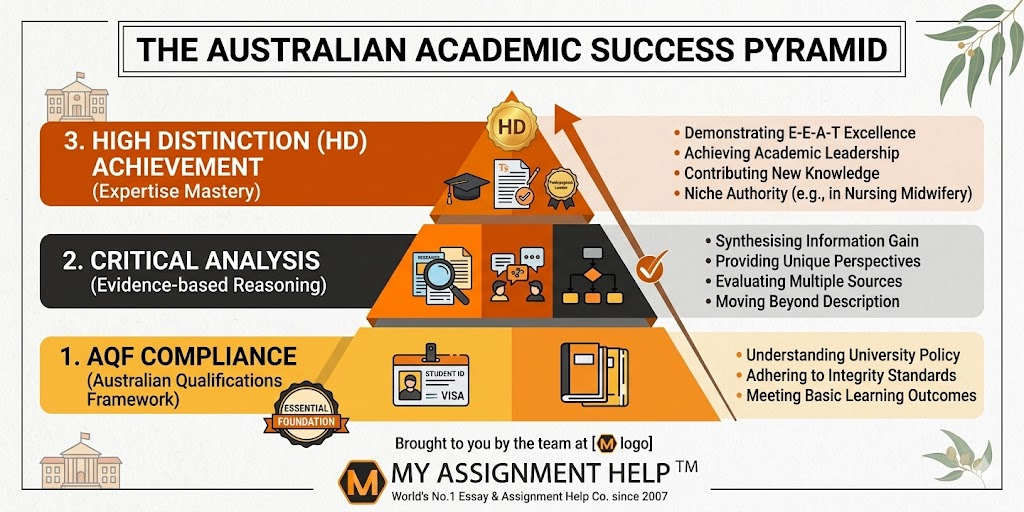
Navigating the “Hidden” Australian Grading Rubric
In Australia, the difference between a “Credit” and a “High Distinction” (HD) often lies in the “Evidence of Criticality.” Rubrics are designed to reward students who challenge existing literature rather than just summarising it.
Key Data Point: According to 2026 educational benchmarks, international students who engage with academic mentorship programs within their first semester see a 15% higher retention rate compared to those who struggle in isolation.
Balancing Theory with Mandatory Practicums
A unique feature of the Australian system is the heavy emphasis on “Work Integrated Learning” (WIL). This is most evident in the healthcare sector. International students pursuing medical degrees often face a “double burden”: maintaining high academic scores while completing hundreds of hours of unpaid clinical placement.
For those in these high-pressure tracks, time management is the ultimate survival skill. For instance, when a student is on a 12-hour night shift at a Melbourne hospital, finding the energy to draft a 3,000-word essay on patient care ethics can be difficult. This is where specialised nursing homework help becomes a vital lifeline, providing the necessary theoretical scaffolding so students can focus on their hands-on clinical competencies without falling behind on their coursework.
Financial Literacy and the “48-Hour” Rule
As of 2026, the Australian government maintains strict regulations regarding student visa work hours (capped at 48 hours per fortnight during study sessions). International students must balance the high cost of living in cities like Sydney or Melbourne with their academic commitments.
Strategic students treat their education like a full-time job. By utilising productivity tools and academic resources early in the week, they avoid the “Sunday Night Panic,” ensuring they do not risk their visa status by overworking at part-time jobs to cover emergency tutoring costs.
Prioritising Mental Wellbeing and Social Integration
Culture shock is real. The “Australian way” involves a high degree of informal communication with lecturers. Students are encouraged to speak up and ask questions. Building a social network through clubs or study groups isn’t just for fun; it is a critical academic safety net that prevents burnout and provides peer-to-peer support.
Key Takeaways for Success
- Understand TEQSA: Academic integrity is non-negotiable; always use proper Australian referencing.
- Seek Support: Utilize specialized resources to bridge knowledge gaps before they impact your GPA.
- Clinical Focus: Prioritise your hands-on placement hours by managing your theoretical research workload efficiently.
- Visa Compliance: Adhere strictly to work-hour limits to protect your residency status.
Frequently Asked Questions (FAQs)
Q: What is the most common mistake international students make in Australia?
Underestimating the “Critical Analysis” section of the rubric. Most students lose marks for being too descriptive rather than analytical.
Q: Is it legal to use academic support services in Australia?
Yes. When used as study guides, research frameworks, or model papers to improve your own understanding, these services comply with university academic integrity policies.
Q: How do I manage nursing placements and assignments simultaneously?
Strategic planning is key. Use specialized academic resources to manage the heavy writing workload during your clinical placement blocks.